What You'll Learn
Here you will learn how to program Sequential Function Charts and understand when to use them as a practical alternative to other programming languages. The course also introduces Structured Text, where you’ll learn to confidently write If–Then–Else statements and apply logical decision-making with ease. By the end of the course, you’ll be comfortable using Structured Text as a powerful alternative to ladder logic, knowing when and why to use it in real-world automation projects.
This Course Includes
1.5 hours on-demand video
Access on mobile and TV
6 downloadable resources
Certificate of completion
Description of this Course
This course covers Studio 5000 PLC Programming using Sequential Function Charts and is intended for users who require the knowledge to design program and implement SFC based control systems within their operation. It is also suitable for anyone who wishes to expand their PLC programming knowledge to a higher level and apply best practice techniques.
My name is Jeff Sharman and I will be your instructor during this training. I have many years of practical experience in PLCs instrumentation and control systems as well as delivering training both face to face and online. I have travelled extensively throughout Africa and the Middle East in both training and client support roles. I also hold a SAQA Further Education and Training Certificate in Measurement Control and Instrumentation which is recognised internationally.
The course begins with a general introduction to Sequential Function Charts and the concepts that will be covered before moving into practical programming examples.
Topics Covered
During this course I will cover the following topics:
- Introduction to Sequential Function Charts including the use of Structured Text
- Creating an SFC and understanding the components used
- Programming SFCs using steps transitions and actions
- Creating assignments and understanding the syntax used
- Using expressions within an SFC
- Programming constructs and comments within an SFC
This list provides an overview only and the course covers these topics in much greater detail.
The course consists mainly of video tutorials where I explain the different aspects of SFC programming and demonstrate how it can be applied in practice.
There are quizzes after each section to help reinforce learning and build confidence.
Once you have completed the course you will receive a certificate of completion.
The more you understand the concepts the more confident you will become when applying them in real systems.
If you are serious about improving your PLC programming skills using Studio 5000 and SFCs then this course is for you.
Who Should Take This Course
- This course, Studio 5000 PLC Programming using SFC’s is designed for anyone already in the PLC and Instrumentation field, who wishes to enhance their knowledge further and feel confident using the best practices when programming your PLC. Use the language that is best for the application.
- For anyone who just wishes to enhance their knowledge.
- Instrumentation and control systems personnel with some experience in PLC programming and it will be advantageous if you have exposure to using script type languages for programming but this is not essential. Anyone who has an interest and need to program Sequential routines.
Browse Some of My Other Courses
Self-Paced Udemy Courses
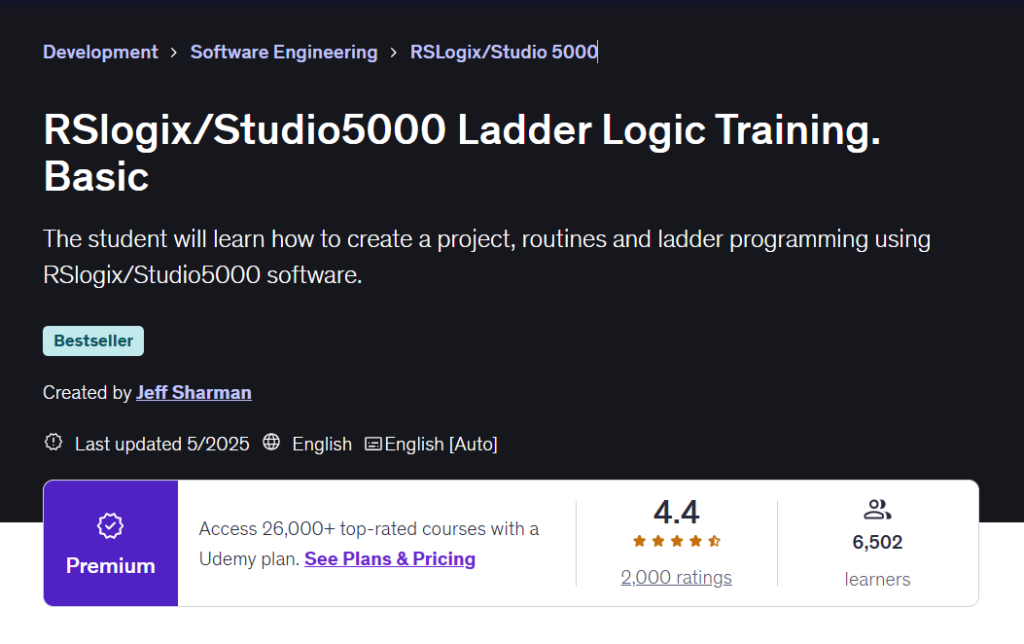
RSlogix/Studio5000 Basic Ladder Logic Training
An introductory course for PLC users with little or no experience in RSLogix / Studio 5000. Learn how to create projects, understand tasks, programs and routines, and build practical ladder logic using real-world examples across Rockwell platforms.
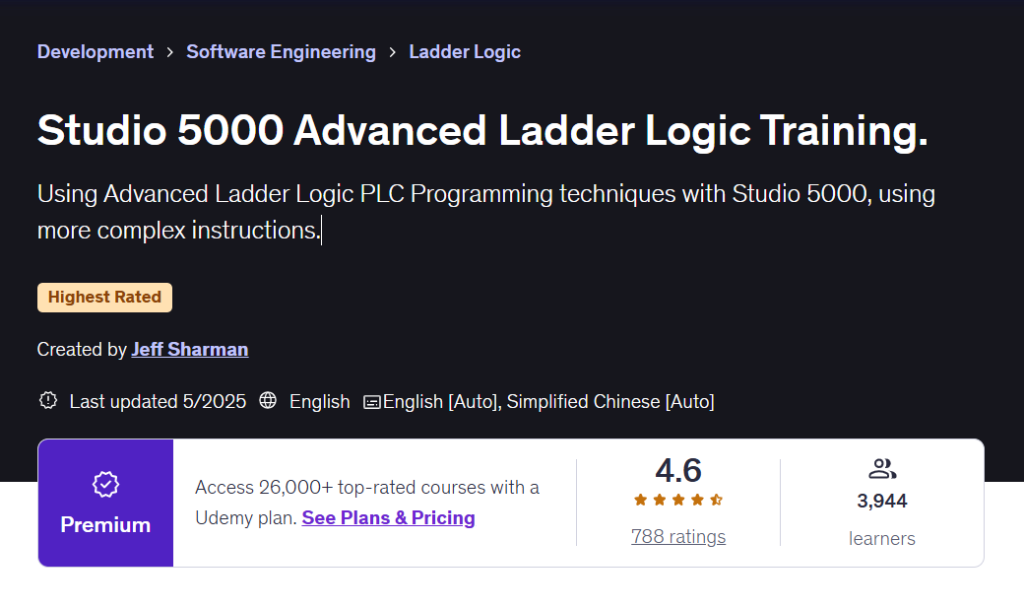
Studio 5000 Advanced Ladder Logic Training
An advanced Studio 5000 course for users with prior experience. Learn advanced ladder logic techniques including messaging bit shifting produced and consumed tags and add-on instructions using real-world Rockwell Automation examples.
RSlogix/Studio5000 Training using Function Block Diagrams
An advanced Studio 5000 course focused on Function Block Diagrams. Learn logical analog and PID programming using FBDs including timers counters and advanced instructions through practical Rockwell Automation examples.