What You'll Learn
Here you will learn how to set up an **industrial Ethernet network** and understand the rules required to maintain stable and reliable communication. The course covers key concepts such as **VLANs** and **network redundancy**, helping you build more robust systems. If you have little or no prior experience with Ethernet, this course will give you everything you need to confidently set up a basic network. You’ll also get a clear introduction to **managed switches** and the advantages they offer in industrial environments.
This Course Includes
1.5 hours on-demand video
Access on mobile and TV
10 downloadable resources
Certificate of completion
Description of this Course
This course covers Ethernet Network Training from basic to intermediate level and is intended for users who require the knowledge to create maintain and troubleshoot Ethernet networks. You will learn how to set up both standard Ethernet networks and industrial Ethernet/IP networks.
During the course I cover a wide range of Ethernet technology topics to ensure you understand how networks are structured how they operate and how to achieve reliable communication.
My name is Jeff Sharman and I will be your instructor during this training. I have many years of practical experience creating maintaining and supporting Ethernet networks as well as delivering Ethernet training courses. I also hold a SAQA Further Education and Training Certificate in Measurement Control and Instrumentation which is recognised internationally.
The course begins with an introduction to the basic connections used in Ethernet networks and then builds through all the requirements needed to make a network operational.
Course Requirements
There are no formal prerequisites for this course. However the following will be beneficial:
-
Computer literacy
-
A basic understanding of Ethernet networking
Topics Covered
During this course I will cover the following topics:
- Introduction to Ethernet
- Numbering systems
- The seven layer model and Ethernet frames
- Wiring and connection options
- Managed and unmanaged switches
- IP addresses and subnet masks
- Half duplex communication
- Full duplex communication
- Setting up an Ethernet network
- Redundancy protocols
- Creating VLANs
- Software tools for managing Ethernet networks
- Using Ethernet/IP to connect to a PLC
This list provides an overview only and additional material is covered during the course.
The course consists mainly of video tutorials where I explain the different aspects of Ethernet technology and demonstrate how to configure networks correctly. There are quizzes after each section to help reinforce learning and build confidence.
By the end of the course you will feel confident creating configuring and maintaining Ethernet and Ethernet/IP networks.
The more exposure you gain to Ethernet technology the more confident you will become when working with industrial networks.
If you are serious about learning Ethernet and Ethernet/IP networking then this course is for you.
Who Should Take This Course
- Anyone who is involved with maintaining or creating Ethernet networks.
- Instrumentation and Control Systems personnel.
- IT and network administrators.
- Anyone who wishes to know more about Ethernet communication which is used on a daily basis.
- Anyone who uses a device to communicate on the internet, uses PLC’s and HMI’s connected to an Industrial Network. Also, anyone who wishes to know more about the World Wide Web.
Browse Some of My Other Courses
Self-Paced Udemy Courses
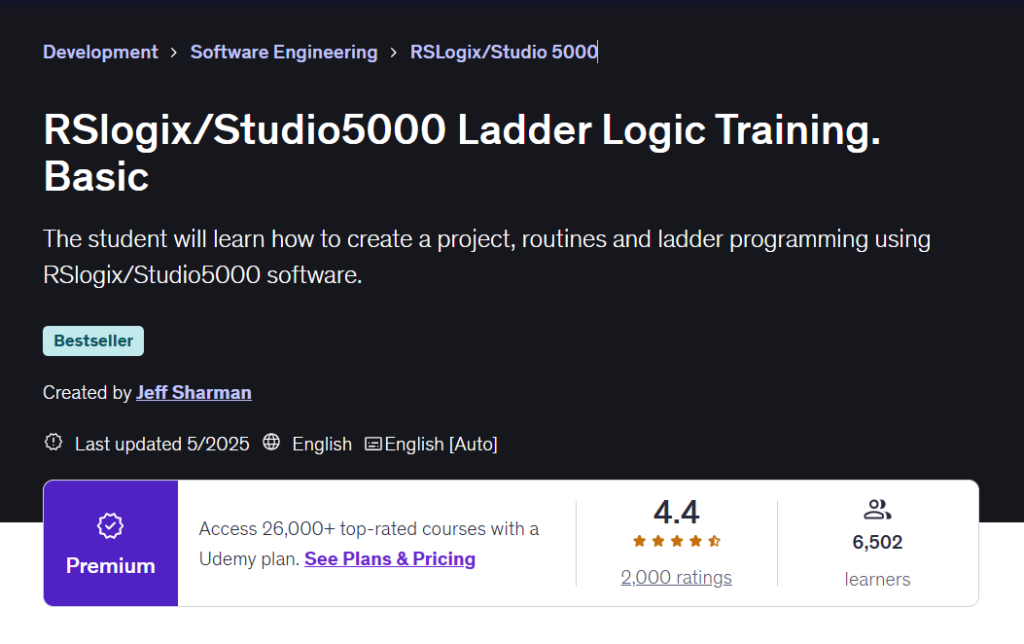
RSlogix/Studio5000 Basic Ladder Logic Training
An introductory course for PLC users with little or no experience in RSLogix / Studio 5000. Learn how to create projects, understand tasks, programs and routines, and build practical ladder logic using real-world examples across Rockwell platforms.
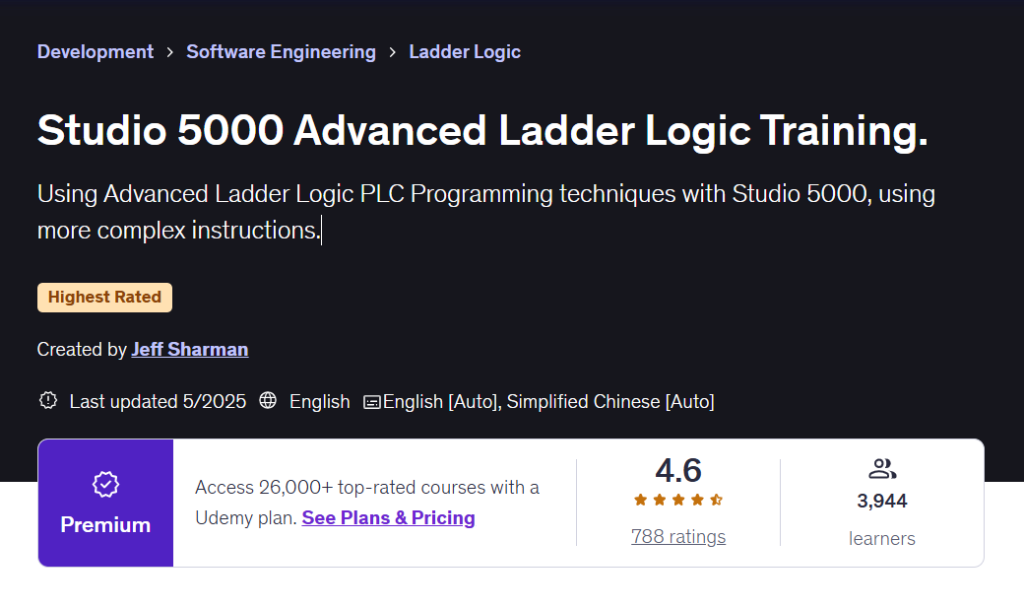
Studio 5000 Advanced Ladder Logic Training
An advanced Studio 5000 course for users with prior experience. Learn advanced ladder logic techniques including messaging bit shifting produced and consumed tags and add-on instructions using real-world Rockwell Automation examples.
Studio 5000 Programming using SFC’s
Advanced Studio 5000 training using Sequential Function Charts. Learn to design and program SFC based control systems using best practice techniques with practical real world examples.